
Betway casino Plinko game
Introduction
When I look at why Betway casino Plinko gets so much attention from UK players, the answer is not just that it is easy to understand. The real reason is that Plinko creates a very specific kind of tension: the rules are simple, but the outcome never feels flat. You drop a ball, it bounces through a field of pegs, and it lands in a payout slot with a set multiplier. That sounds almost too basic to hold attention for long. In practice, it often does the opposite.
What makes Plinko worth examining is the gap between its clean interface and its actual play experience. On the surface, it looks lighter than a slot and less technical than Betway Casino roulette. But once I break down the rhythm, stake flow, multiplier spread, and risk settings, it becomes clear that this is not just a casual side product. It is a fast, highly variance-driven casino game that can feel calm in one session and brutally swingy in the next.
For players in the United Kingdom searching for a clear explanation of Betway casino Plinko, the important question is not whether the format is trendy. The better question is what this game really offers, what kind of session it creates, and what a player should expect before placing the first bet. That is exactly what I will cover here: the mechanics, the tempo, the probabilities, the practical strengths, and the limitations that matter in real play.
What Plinko is and why it draws so much interest
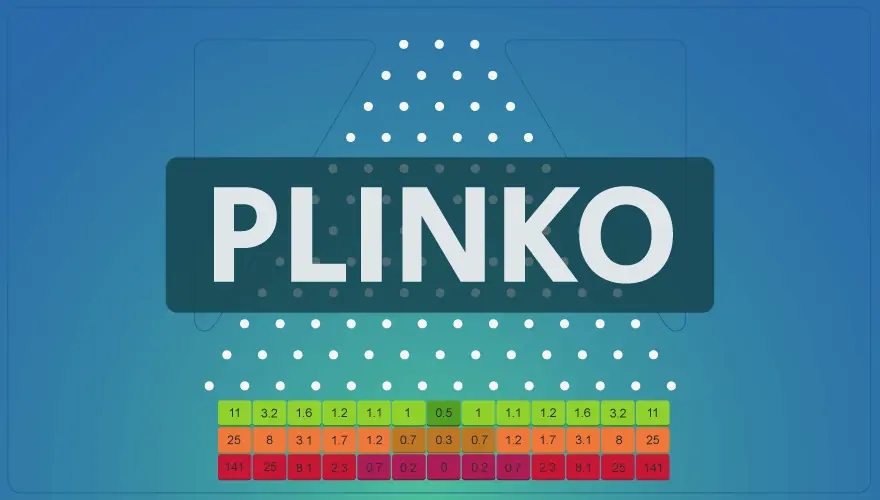
Plinko is a chance-based casino game built around a vertical board filled with pegs. A ball is released from the top, hits the pegs on the way down, changes direction repeatedly, and eventually lands in one of several prize slots at the bottom. Each slot is tied to a multiplier. Low multipliers usually sit near the centre, while the rare high multipliers tend to appear at the far edges.
The most important condition to weigh before playing is the volatility setting, which directly changes the payout table and the frequency of wins. Lower-risk modes return smaller wins more often, while higher-risk modes push the odds toward rare, larger payouts that can deplete a bankroll quickly. Many players overlook that the house edge remains constant across these settings, so the choice affects variance rather than the long-term return. A sensible approach is to test the mid-range risk level first and observe how the balance swings before committing to the extreme ends of the board.
I think this is one of the biggest reasons the format became so noticeable. It gives instant clarity. A new player does not need to learn paylines, wild substitutions, cluster systems, cascading reels, or bonus triggers. The appeal is immediate. You choose a stake, select a risk level, release the ball, and watch the result unfold in seconds.
But there is another reason Plinko stands out. It turns randomness into a visible event. In many casino games, the result appears all at once. In Plinko, the path is part of the entertainment. The ball appears to hesitate, drift, recover, and sometimes tease a high-paying edge before bouncing back toward the middle. That journey creates suspense even when the eventual multiplier is modest. One of my recurring observations is that Plinko often feels more dramatic than its actual return suggests, because the movement itself carries emotional weight.
This is also why Betway casino Plinko can attract players who do not normally spend much time on traditional slots. The game is less about theme and presentation, and more about direct outcome anticipation. It strips the experience down to timing, trajectory, and multiplier distribution.
How the Plinko system works in practice
At a basic level, the player chooses a bet amount and drops a ball onto the board. The ball then hits a sequence of pegs, moving left or right at each contact until it reaches a multiplier slot. The final payout is the original stake multiplied by the value of the slot where the ball lands.
That is the simple version. The more useful explanation is what each setting changes in practice.
Most Plinko versions include a choice of risk level, often described as low, medium, or high. Some versions may also include a board-size or row setting. These options do not make the game more or less random in a simple sense; they alter how the payout distribution is structured.
| Core element | What it changes | What it means for the player |
|---|---|---|
| Bet size | Base value of each drop | Directly affects session cost and the cash impact of swings |
| Risk level | Spread of multipliers across the board | Higher risk usually means more low returns and rarer large hits |
| Rows or board depth | Number of bounce decisions before landing | Can widen the distribution and change how extreme outcomes appear |
| Auto-play speed | How quickly drops are repeated | Can accelerate bankroll movement much faster than many players expect |
Low-risk mode usually compresses the result range. In other words, the board offers smaller extremes. You are more likely to see middling outcomes and less likely to hit dramatic top-end multipliers. High-risk mode stretches the board mathematically. That often means many more low-value landings and a much smaller chance of a standout result. The game may look identical, but the session can feel completely different.
This is where I think many players misread Plinko at first. Because the interface is minimal, they assume the experience is mild. It often is not. A high-risk Plinko setup can burn through a bankroll quickly if the stake is too ambitious, especially when auto-play is running. The simplicity of the board should not be confused with softness in the underlying distribution.
Another practical point: the path of the ball is visually engaging, but players should understand that the result is governed by the game’s internal randomisation. The bouncing sequence is the presentation layer of chance, not a skill mechanic. Watching the ball flirt with a high multiplier can create the illusion that a certain release point or pattern matters. In regulated casino environments, that is not how the outcome should be interpreted. The key decision is not where to “aim” the ball, but how to manage stake size and risk settings.
Why the game feels engaging and how the session tempo develops
The tempo of Plinko is one of its defining strengths. A single round is short, but not instant. That small delay matters. It gives the player enough time to follow the ball and anticipate the landing, yet the result arrives quickly enough to keep momentum high. It sits in an unusual space between the instant reveal of some casino formats and the more layered pacing of slot bonus rounds.
From a session perspective, this creates a loop that is easy to fall into:
- You place a stake and get an immediate visual event.
- The ball’s route creates brief suspense.
- The result is clear at a glance because the multiplier is visible.
- The next drop is available almost immediately.
That loop is efficient, and that efficiency is exactly why the game can become absorbing. There is very little friction between rounds. No symbol reading, no waiting for a feature to trigger, no long animation sequence unless the platform adds one. On Betway casino Plinko, this kind of rhythm can appeal to players who want a more direct and stripped-back form of casino entertainment.
Still, there is a trade-off. Fast pacing increases emotional intensity and can reduce decision quality. I often notice that players treat Plinko as “lighter” than a slot because each round feels so clean and compact. Yet the short round cycle can make losses accumulate quietly. A game does not need reels or a bonus buy to move money quickly. Plinko proves that very clearly.
One memorable feature of the format is that disappointment and excitement can happen in the same two-second sequence. The ball may drift toward a high multiplier, raise expectations, and then fall back into a common slot at the last bounce. That near-miss sensation is part of the emotional architecture of Plinko. It is not unique to this format, but here it is unusually visible. The player sees the promise fade in real time.
Risk profile, variance, and who should approach with caution
If I had to summarise the risk profile of Plinko in one line, I would say this: it is a simple game with a potentially sharp variance curve. That is especially true once higher-risk settings are selected.
Many players naturally focus on the top multiplier shown on the board. I understand the appeal. Big numbers are attention-grabbing. But the more useful habit is to focus on the shape of the whole payout spread. In most versions of Plinko, the highest returns are rare by design. The board is usually weighted toward more frequent central landings, and those central slots often pay low multipliers that may not fully offset a sequence of previous drops.
This means a player can experience long stretches of modest or poor returns before seeing a standout result, and in some sessions that standout result may not arrive at all. That is why bankroll planning matters here more than the clean design might suggest.
| Player type | How Plinko may feel | Practical fit |
|---|---|---|
| Low-intensity recreational player | Enjoyable in low-risk mode, but repetitive if used too long | Best for short sessions and controlled stakes |
| High-variance seeker | Appealing because of rare large multipliers | Suitable only with acceptance of long dry stretches |
| Slot bonus hunter | May find it too bare and lacking layered features | Often better served by feature-rich slots |
| Strategy-focused table game player | May enjoy the clarity, but not the lack of tactical depth | Could lose interest quickly |
Who should be cautious? First, players who chase outcomes. Plinko can tempt people into increasing stakes after a run of weak landings, especially because each drop is over so quickly. Second, players who equate visible movement with control. The ball’s path looks tangible, but the player is not steering the result in any meaningful way. Third, players who are sensitive to rapid bankroll fluctuation. High-risk mode can produce exactly that.
In my view, Plinko suits players who are comfortable with direct randomness and do not need a narrative layer around the action. It is less suitable for those who want strategic input, deeper bonus architecture, or longer-form progression inside a session.
What to understand about probabilities and likely outcomes before starting
The most important thing to understand before launching Plinko is that the board is not evenly rewarding. The visual layout may look symmetrical, but the payout logic is intentionally uneven. Common outcomes cluster around the centre. The biggest multipliers sit on the edges precisely because they are harder to hit.
This matters because a player can misjudge the game by focusing on isolated screenshots or highlight clips. In real sessions, the most dramatic outcomes are not the standard experience. The standard experience is repetition, mostly moderate or low returns, and occasional spikes that shape the final result more than the average drop does.
Here are the practical points I would keep in mind:
- Top multipliers are not a baseline expectation. They are the exception built into the design.
- Risk settings change the feel of the session more than many players expect. A switch from low to high risk can make the same stake behave very differently.
- Fast rounds distort perception. Twenty or thirty drops can happen quickly, which makes loss tracking more important.
- Short-term results can be misleading. A strong early hit can create false confidence, while a poor run can push players toward irrational stake changes.
One of the more interesting things about Plinko is that it makes probability feel visible without actually making it intuitive. Players can see the ball move through a branching route, which gives a sense of understanding. But that visual familiarity does not automatically translate into good judgement about expected outcomes. In that sense, Plinko is transparent and deceptive at the same time: transparent in presentation, deceptive in how easily the eye mistakes motion for pattern.
How Plinko differs from slots and other common casino formats
The easiest comparison is with online slots, because that is where many players come from. Classic slots rely on reels, symbol combinations, and often layered features such as free spins, multipliers, expanding symbols, or bonus rounds. The player experience is built around anticipation of triggered events and the changing value of symbol interactions.
Plinko does not work that way. It removes almost all decorative complexity. There are no reels to stop, no paylines to evaluate, and usually no feature ladder to wait for. The result comes from a single event: where the ball lands.
That creates several practical differences.
First, Plinko is easier to read instantly. A player can understand the board in seconds. Second, it is less thematic. If someone enjoys slots for their design, music, and bonus storytelling, Plinko may feel too stripped down. Third, the emotional pattern is different. Slots often build suspense through feature anticipation; Plinko builds it through visible descent and final position.
Compared with roulette, Plinko shares a pure chance foundation, but the experience is more animated and less formal. Compared with blackjack or baccarat, it offers far less decision-making. Compared with crash-style games, it can feel more tactile because the outcome appears to travel through space rather than stop at a number.
In practical terms, Betway casino Plinko is best understood as a hybrid between instant-result gambling and visual suspense entertainment. It is not trying to replace feature-heavy slots or strategy-led table games. It occupies a narrower lane: simple input, quick resolution, high replay potential, and a result pattern that can swing sharply depending on settings.
Where the game performs well and where it can disappoint
Plinko has clear strengths, and I think they are strongest when the player wants a direct, low-friction session. The setup is quick. The rules are easy to grasp. The board communicates the reward structure visually. There is no need to study a paytable for ten minutes before understanding what is happening.
Another genuine advantage is pacing control. Because rounds are short, players can test different stake levels or risk modes without committing to long feature cycles. Demo play, where available, can also be genuinely useful here because it lets a player feel the rhythm of the board rather than just read about it. With Plinko, rhythm matters almost as much as maths in shaping the experience.
There is also a psychological strength to the format: every round feels self-contained. That can make the game easier to dip into for a short session than a slot with heavy audiovisual build-up. For some players, that is a real benefit.
But the limitations are just as real. The first is repetition. Because the core action never changes, some players lose interest quickly once the novelty of the bouncing path fades. The second is the lack of strategic depth. If someone wants meaningful decisions during play, Plinko will likely feel thin. The third is that high variance can create a mismatch between expectation and reality. A board showing eye-catching edge multipliers can encourage unrealistic hopes.
A detail that often gets overlooked is that Plinko can feel more “fair” than a slot simply because the board is visible. I would be careful with that assumption. The format is clearer to watch, but clarity of presentation is not the same as generosity of outcomes. That distinction matters.
What I would check before launching Betway casino Plinko
Before starting a session, I would focus on a few practical checks rather than jumping straight into repeated drops.
First, look at the risk setting. This is not a cosmetic option. It changes the texture of the session. If the goal is a steadier experience, lower risk is the more sensible entry point. If the goal is chasing larger multipliers, then the player needs to accept that many outcomes may be small and that the bankroll can move down quickly.
Second, decide on a stake that matches the pace of the game, not just the balance in the account. This is where players often get caught out. A stake that feels harmless on a slower game can become expensive when rounds resolve back-to-back with almost no downtime.
Third, check whether auto-play is active or tempting. Auto-play is not inherently a problem, but on a fast title like Plinko it can remove the pause that helps players stay aware of session cost. In my experience, manual drops create better awareness of rhythm and spend. Players who value quick withdrawals will find real timings in Betway Casino Gates of Olympus slot tips.
Fourth, if a demo mode is available, use it briefly. Not because it predicts real-money results, but because it helps answer a practical question: do you actually enjoy this style of repetition and suspense? Some players know within five minutes that Plinko suits them. Others realise just as quickly that they prefer a more layered format.
Finally, set expectations correctly. Bet way casino or any other brand can present the game cleanly, but the underlying truth remains the same: Plinko is a chance-led product with a simple interface and potentially uneven short-term outcomes. The best starting point is curiosity combined with discipline, not the assumption that visible motion makes the result easier to “read.”
Final verdict
Betway casino Plinko offers a very specific kind of casino experience. It gives the player a clean board, quick rounds, visible suspense, and a payout structure that is easy to understand at a glance but not always easy to handle emotionally. That is its real identity. It is simple to enter, but not necessarily simple to manage once variance starts to shape the session.
Its strongest points are obvious in practice: low barrier to entry, fast readability, immediate action, and a style of tension that comes from watching chance unfold rather than waiting for features to trigger. For players who want direct gameplay without layers of slot design, Plinko can be genuinely appealing.
The caution points are just as important. The pace can hide how quickly stakes add up. High-risk settings can produce harsh sequences. The visual path of the ball can create a false sense of pattern or control. And if a player wants strategic influence, rich bonus structure, or longer-form progression, this format may feel too narrow. A quick read of top Betway Casino games before depositing real money answers most questions about limits and account settings.
So, is Plinko worth trying? In my view, yes, if the player understands what it really is. It is not a slot replacement for everyone, and it is not a tactical game in disguise. It is a compact, variance-driven casino format built around visible randomness and fast emotional feedback. That combination is exactly why some players find it engaging and why others move on quickly. The key is knowing which type you are before the session starts.
FAQ
How does Plinko work with ball drops and multipliers?
A ball is released and falls through a field of pegs, bouncing into different scoring sections. Each landing area is linked to a multiplier, which determines the size of the win or loss for that round.
Which settings should be checked before starting real-money Plinko play?
Review the stake or bet amount and confirm the selected multiplier range or volatility option shown for the current table. Also check whether the game is in demo mode or real-money play, since the interface can look similar.
Is a bonus or promo code needed to play Plinko?
Plinko rounds do not normally require a bonus code to run. If a promotion is shown alongside the game, it will list the code or offer conditions, but the base game itself runs without activating anything.
What happens if a user switches from demo mode to real-money during the same session?
Switching modes updates the payment basis for the next round. Any stake placed after the switch is tied to real-money play, while earlier demo results remain separate and do not carry over as cash balance.
Does the mobile casino app support Plinko, or is the mobile site enough?
Both the mobile site and the mobile casino app typically support Plinko access. The cleanest experience depends on device performance and the app version, but the core ball drop gameplay stays the same.
What is a common beginner mistake when choosing a Plinko stake?
Selecting a higher stake without confirming whether the game is in demo mode is a frequent issue. Another mistake is changing the stake mid-animation and expecting the current ball drop to update, even though the outcome depends on the round already in progress.